
What search and rescue dog work actually is
This blogpost explains what search and rescue dog work requires. Search and rescue dog work, or SAR, is the organised use of a trained dog-and-handler team to help locate missing people. The dog searches for a defined human-scent problem, communicates a find through a trained final response and remains under operational control. Meanwhile, the handler works as part of a larger search organisation.
The first training sessions may look like an exciting game of hide-and-seek. Operational SAR is not recreational nose work with a radio and a nice vest. It requires team procedures, search strategy, navigation, first aid, documentation, safety and repeated assessment. It also requires you to be willing to work when the conditions are inconvenient rather than picturesque.
The dog is only one half of the job. A technically excellent dog and an unprepared handler do not make a deployable team.
Part I of K9 Teams , especially Chapters 1–5 (pp. 1–41; PDF edition pp. 16–56), explains this distinction well. Anyone who joins is expected to contribute to an emergency-response organisation. This is not a class in which an instructor develops somebody’s pet while the owner watches. The book was published in 2018 and some organisational details are specific to North America. The central point still applies everywhere: join the team before designing the dog’s training.
This guide gives you enough information to decide whether to take the next step. It is not a training plan and cannot make a team ready for deployment.
Decide whether you want recreation, certification or deployment
People use the phrase “SAR training” to describe three different goals. All three are legitimate. They are not interchangeable.
Recreational search games
You can teach hide-and-seek, tracking foundations or mantrailing as an enjoyable activity without any intention of deploying. Recreational training can provide enrichment, improve your observation skills and give an active dog a constructive job.
There is nothing inferior about stopping at recreational work. In fact, it may be the best choice when you enjoy scent work but cannot commit to emergency callouts, team administration, extensive travel or the emotional demands of real searches.
Sport or test preparation
International and national organisations offer structured tests for rescue dogs. These tests can provide clear training goals and an independent assessment.
Passing such a test does not automatically make the team operational. Page 5 of the 2025 FCI/IRO International Testing Standards states that the tests form a basis for continued training and that only the deployment organisation determines mission readiness. The organisation may impose additional standards for radio procedure, navigation, first aid, fitness, equipment and recurring assessment.
Operational search and rescue
An operational team can be requested through the responsible authority and can work within the incident’s command structure. The exact requirements depend on the country, region, discipline and organisation.
Do not call yourself an operational SAR team merely because your dog passed an online course, found friends during training or earned an unrelated scent-work title. Deployment authority, recognised certification, team membership and continuing readiness are four separate matters.
Understand the main SAR disciplines
“SAR dog” is an umbrella term. Each discipline has its own scent problem, search strategy, equipment, final response and operational purpose. Training in one discipline does not automatically qualify the dog for another.
The current IRO rules treat tracking, area search, rubble, avalanche, mantrailing and water work as separate disciplines (2025 FCI/IRO rules, abbreviations and test structure, pp. 4–6 ). A local organisation may divide or name its work differently.
Area or wilderness search
An area-search dog normally works off lead to locate live human scent within a defined area. It ranges away from the handler, uses the wind and terrain, finds a person and performs its trained alert.
The dog commonly searches for any human in the assigned area rather than following the route of one named person. The handler must understand which sectors the dog covered, where the scent may travel and when to reposition the dog.
For area search, a suitable dog needs independence, a reliable recall, neutrality towards irrelevant people and dogs, confidence in the environment and enough physical capacity for the terrain.
Tracking
A tracking dog follows the odour picture associated with a person’s path. This includes disturbed ground and human scent. Depending on the system, precision on or close to the travelled route may be important.
The surface, vegetation, wind, sun, temperature, moisture, age of the track and contamination all affect this scent problem. Tracking is not simply a matter of asking the dog to put its nose down. The handler must read changes in the dog’s behaviour without steering it towards a guessed answer.
Mantrailing
A mantrailing dog receives an individual scent article and is asked to follow that person’s route. It normally works in a harness and on a long line.
The 2025 IRO rules recognise mantrailing as a separate discipline. Standards and operational acceptance still vary between organisations and jurisdictions. Ask the local team which evidence, contamination controls and certification it requires. Internet arguments about terminology will not answer that question.
Rubble or urban disaster search
A rubble dog searches collapsed or simulated structures for concealed live victims. It may have to move independently across surfaces that look unstable, work at a distance, ignore noise and activity, locate scent emerging away from the victim and alert without entering an unsafe void.
Real rubble can contain sharp metal, glass, dust, leaking liquids, unstable material, darkness, confined spaces and hidden voids. The IRO training-ground safety note explicitly lists these risks. Never improvise a pile of rubble as an obstacle course for a puppy.
Avalanche search
Avalanche dogs search through snow for buried people. This work requires specialist terrain knowledge, winter fitness, safe travel, suitable hides, emergency systems and instructors who understand avalanche hazards.
An athletic dog and a home near the mountains are not enough. The handler’s own competence in the mountains is part of the team’s safety system.
Water rescue
Water-rescue work may involve taking a line or rescue device to a person, towing a person or disabled boat, and working from the shore or a boat. This is not the same discipline as using a dog to locate submerged human remains.
The dog must be a capable and willing swimmer. The handler needs suitable water-safety skills as well. IRO identifies drowning, low water temperature, weather, dehydration and slipping in a boat among the risks.
Human remains detection and search recovery
Human remains detection, commonly abbreviated to HRD, and search recovery use a different target odour and have a different operational purpose from live-find SAR. The training materials may be controlled by law and must be handled, stored and documented correctly.
Do not casually combine live-find and human-remains work merely because both involve human scent. Some organisations cross-train according to defined protocols, while others do not. Follow the deployment organisation and its validation standard.
Prospective handlers should also consider the emotional burden of this discipline. Searches may involve fatalities, grieving families, law enforcement and evidential procedures.
What the dog must learn
A SAR dog does not simply “use its nose”. Every healthy dog can detect odours that humans cannot detect. Training turns this ability into a defined task with a specific target, a repeatable search strategy and a communication system.
The reward makes searching worthwhile
First, the dog needs a reward that it genuinely values, normally play, food or both. The reward is not a decoration added at the end of the exercise. It gives the dog a reason to solve a difficult problem again and again.
Modern training develops this motivation without pain, intimidation or forced exposure. The AVSAB humane dog-training position statement supports reward-based methods for all dog training and states that aversive methods are unnecessary.
Independent searching
The dog learns to leave the handler, investigate the environment and continue searching when the answer is not visible. In disciplines that use a line, independence means following the scent evidence rather than the handler’s body language. In area work, it also means ranging far enough to cover the ground while remaining responsive to direction and recall.
The handler must resist the temptation to help the dog towards a known hide. Otherwise, the dog may learn to read the handler instead of solving the scent problem.
A defined scent task
The dog learns which target matters in its discipline and which odours do not. An area dog may search for any live person in the sector. A trailing dog may follow the individual represented by a scent article. An HRD dog must distinguish its trained target odour from live human scent and environmental distractions.
This is why the details of the training must come from the team. A seemingly minor change in scent handling, helper behaviour or the search setup can teach the dog a different task.
A clear final response
Finding a person is only useful when the handler knows about the find. The dog therefore learns a final response, which is also called an alert or indication.
Common systems include:
- bark alert: the dog remains with the person and barks until the handler arrives;
- refind or free indication: the dog returns to the handler, gives a recognisable signal and leads the handler back;
- bringsel: the dog picks up a device attached to a special collar, returns to the handler and then leads back;
- passive indication: the dog sits, stands or lies down at the source in disciplines where that response is appropriate;
- scratching and penetration: used in defined avalanche contexts.
The 2025 IRO rules describe these as separate formal systems and require the handler to declare the chosen alert before the search (alerts, pp. 36–40 ). Your local team may permit only some of them.
The final response is trained separately before it is combined with a complex search. Helpers must deliver the reward consistently. Poor timing can cause the dog to jump on the subject, leave the source, mouth equipment, bark weakly or communicate a false find.
Operational control
The dog learns recall, controlled movement, transport, waiting, safe loading and unloading, neutrality around other teams and, where required, stopping or lying down at a distance.
Control should support the search, not turn it into a lengthy obedience performance. The dog needs enough freedom to solve the scent problem independently and enough responsiveness to avoid roads, wildlife, unstable areas and other hazards.
Environmental and physical skills
The dog may also learn to travel calmly, wait in staging, wear discipline-specific equipment, move across inspected obstacles, accept being carried, work in darkness or weather and recover between searches.
The aim is not to produce a dog that notices nothing. The dog should be able to process something new, recover and continue working without being flooded.
What the handler must learn
Many interested owners focus entirely on the dog’s nose. In practice, the handler’s syllabus is much longer.
Depending on discipline and organisation, it can include:
- canine learning and welfare;
- scent movement and environmental effects;
- reading the dog’s changes of behaviour;
- search strategy and sector coverage;
- map, compass and GPS navigation;
- radio procedure;
- human first aid and canine first aid;
- incident command and team communication;
- missing-person behaviour;
- weather and terrain hazards;
- evidence and scent-article handling;
- search documentation and training records;
- fitness and personal protective equipment;
- transport, logistics and field self-sufficiency;
- legal, insurance and organisational requirements.
The handler must also learn when not to deploy the dog. Illness, injury, heat, exhaustion, inadequate preparation or a task outside the team’s certification are reasons to stop. They are not opportunities to prove your commitment.
Chapters 2, 4 and 8–14 of K9 Search and Rescue (pp. 21–411; PDF edition pp. 48–438) cover the progression from search games to wilderness and rubble work, deployment tactics and testing. The book remains a useful overview of the many parts that must come together. This guide does not treat its older “drive complex” terminology or book-specific toy method as universal science or a required programme.
Decide whether your dog is a realistic candidate
The breed can influence body size, coat, movement, social tendencies and common motivations. It cannot certify the individual dog.
The 2025 IRO rules allow dogs to take the tests regardless of their size, breed or pedigree (requirements for the dog, p. 8 ). Real teams still evaluate whether the individual dog can perform the required discipline safely.
Health and structure
The dog needs sound movement, an appropriate body condition and enough physical capacity for the terrain. A veterinary examination should cover its current health and any concern that is relevant to the dog’s age, breed and intended work.
Every size comes with trade-offs. A large dog may cover rough vegetation effectively but be difficult for the handler to lift or carry out. A small dog may move through confined spaces but have less reach or endurance in deep snow. There is no universally ideal body for SAR work.
Reward motivation and persistence
The dog should value a reward that the team can use and continue searching when the answer is not immediately available. Persistence must remain thoughtful. Frantic movement without actual scent work wastes energy and can become unsafe.
A 2025 study of trained SAR dogs found that induced frustration reduced heart-rate variability and increased the delay in a search task more than moderate exercise did. The sample and task cannot define every dog. The result does, however, support one practical rule: training should build persistence through solvable problems instead of repeatedly blocking the dog until it becomes frantic.
Environmental resilience
A candidate should be able to encounter unfamiliar people, vegetation, darkness, vehicles, machinery, flooring, weather and noise without losing the ability to work. Recovery matters more than pretending that the dog never startles.
Introduce new environments in gradual steps. Flooding a worried dog on rubble or forcing it across an obstacle can harm its welfare and confidence while telling you very little about its future suitability.
Sociability and neutrality
A live-find dog must be willing to approach and remain with an unfamiliar person. It must also pass irrelevant people, helpers and other dogs without abandoning its task.
Aggression towards people, uncontrolled aggression towards dogs or persistent fear can make safe deployment impossible. The 2025 IRO rules require judges to observe temperament throughout the test. They permit termination for aggressive behaviour, leaving the handler or an obvious lack of control (social behaviour, p. 9 ).
Independence and handler relationship
The dog must solve scent problems without constant visual instructions while still accepting direction, recall, care and safety handling. A dog that refuses to leave the handler may not search a large enough area. A dog that disconnects completely may be unsafe.
Ability to wait and recover
Operational days involve transport, briefings, staging and long periods during which the dog does not search. A dog that cannot rest may exhaust itself before it is deployed.
An off-switch is part of the work. It is not evidence of low motivation.
Age and training history
A puppy can develop excellent foundations, but its early enthusiasm cannot certify its suitability as an adult. An adult pet may become a SAR dog when its health, temperament, motivation and training history fit the team’s requirements.
Ask the team to assess your dog before buying specialised equipment or spending months on a final response that the team does not use.
Chapter 1 of K9 Search and Rescue Troubleshooting , “Finding a Good SAR Dog” (pp. 1–28; PDF edition pp. 12–39), examines the difference between wanting a pet to perform SAR and honestly evaluating whether the dog and handler are capable and willing. Its most useful message is not that you need a particular breed. It is that desire cannot replace a candid assessment.
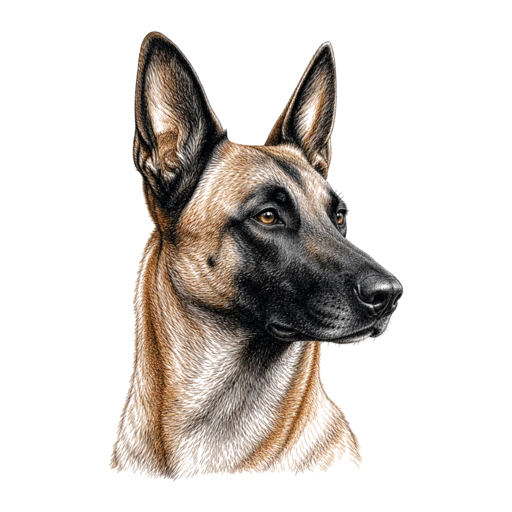
Is a Belgian Malinois a good SAR dog?
A suitable Malinois can be an excellent SAR dog. The breed can provide athleticism, fast learning, strong motivation for play, persistence, engagement with the handler and a willingness to work in difficult environments.
These same traits also create risks:
- high arousal can become frantic searching;
- environmental awareness can become sensitivity;
- speed can reduce thoughtful coverage;
- strong interest in movement can compete with wildlife neutrality;
- intensity can make waiting and recovery difficult;
- the dog may continue through fatigue or discomfort unless the handler intervenes;
- poor handling can create conflict quickly.
A 2026 study of 32 SAR dogs and candidates associated search performance with a combination of environmental, management and personality factors. In that particular trial in woodland, speed, ground coverage and a high-arousal/reactive profile were associated with performance. Temperature and wind had negative associations. The authors explicitly call for the findings to be confirmed in larger samples. Do not turn this small study into a rule that “more arousal is better”. The useful conclusion is that performance depends on several factors and on the context.
Hence, a Malinois is neither automatically superior nor automatically too intense. Evaluate the individual dog for the actual discipline, handler and team.
Understand the human commitment before joining
SAR often changes the handler’s weekly schedule and priorities. Many teams consist of volunteers. You may receive no payment for the work while still paying for equipment, fuel, veterinary care, classes, travel and time away from your normal job.
A realistic commitment can include:
- regular team training throughout the year;
- personal practice between team sessions;
- acting as a hidden subject for other dogs;
- classroom study and written assessments;
- navigation, first-aid and radio courses;
- fitness work for dog and handler;
- travel to distant training areas and tests;
- maintaining logs and team equipment;
- fundraising or administrative duties;
- being available for callouts under the team’s rules;
- waiting in staging without being deployed;
- maintaining certification after the first pass;
- retiring or redirecting the dog when welfare or performance requires it.
Your family and employer may also carry part of this commitment. Before applying, discuss the unpredictable schedule, vehicle use, household responsibilities and emergency care with them.
The work is not a continuous series of heroic finds. Some searches end without locating the subject. Some involve recovery rather than rescue. Other callouts are cancelled while the team is still travelling. Humility and emotional stability matter.
See how training normally develops
Every team uses its own system, but the broad training sequence normally looks like this.
1. Team assessment
The organisation evaluates the handler, the dog and the intended discipline. It also explains its training methods, membership process, standards and costs.
2. Foundation skills
The dog develops reward value, recall, cooperative handling, transport, rest, confidence in the environment and appropriate neutrality. At the same time, the handler begins the team’s education programme.
For a puppy, safe socialisation should begin during the early sensitive period. Do not isolate the puppy until every vaccination is complete, but do not overwhelm it either. Follow the veterinarian’s risk guidance and the AVSAB puppy-socialisation position statement .
3. Easy search games
A helper becomes valuable to the dog, moves a short distance away and rewards it immediately after being found. The first hides are obvious and successful.
The purpose is to build a strong search concept. It is not a test of how long the dog can fail.
4. Independent scent problem
The amount of visual information decreases. Distance, delay, terrain and environmental complexity increase gradually, normally by one major variable at a time. The handler learns to recognise when the dog enters, loses and reacquires the scent.
5. Final response
The team trains the alert separately, makes it clear and only then attaches it to the find. Helpers learn the exact reward timing and how to behave safely.
6. Generalisation and proofing
The team works with different people, positions, weather, terrain and distractions. Search problems become blind, which means that the handler does not know the location. Blank searches teach both partners how to finish correctly when no subject is present.
7. Handler tactics and team integration
The handler learns to plan sectors, communicate, navigate, record coverage and follow the team’s procedures. The search problems become operationally realistic without sacrificing safety.
8. Independent assessment and continuing readiness
The dog and handler complete the tests required by the organisation. Training continues after certification. Predictable repetitions, declining fitness and cues from the handler can weaken a team that appears to be finished.
Chapters 5–7 of K9 Search and Rescue Troubleshooting (pp. 65–104; PDF edition pp. 76–115) are particularly relevant to cross-training decisions, humane methods, generalisation and the diagnosis of training problems. As with every older book, read it through the current welfare standards instead of adopting every historical technique.
Safety and welfare are part of competence
Search environments can injure the dog and the handler. Safety is not an extra that you add after the dog becomes enthusiastic.
Before and after work:
- warm up and cool down appropriately;
- inspect paws, nails, skin, eyes and gait;
- carry water and know the heat or cold plan;
- condition progressively rather than using searches as the entire fitness programme;
- use required personal protective equipment;
- know the veterinary and evacuation plan;
- stop for lameness, heat stress, marked confusion, unusual avoidance or loss of normal search behaviour;
- decontaminate according to the incident and veterinary protocol when exposure is possible;
- document injuries and recovery.
This risk is not theoretical. In a study of 25 FEMA-certified dogs deployed to the 2014 Oso landslide, 21 had a recorded injury or illness. Abrasions, pad wear, split pads and lacerations were the most common injuries. Dehydration was the most common illness. Prompt veterinary care prevented minor problems from becoming more serious (Gordon et al., 2015 ).
A 2024 survey of 1,582 Swedish sport and utility dogs found that 58.7% had experienced an injury during training, competition or elsewhere. Belgian Malinois had increased odds in this sample (Svensson et al., 2024 ). This cross-sectional survey of owners cannot calculate the risk for your dog. It does provide a good reason to take conditioning, surfaces, recovery and early pain seriously.
Never train on unstable rubble, avalanche terrain, swift water or any other technical environment without qualified control of the site.
Certification is not the finish line
The 2025 IRO rules set minimum ages of 15 months for the pre-test, 18 months for Level A and 20 months for Level B. They allow dogs of any breed or pedigree, prohibit force during the event and assess both nose work and obedience or dexterity (requirements, pp. 5 and 8–9 ).
These are rules for a test, not a universal licence to deploy. A local wilderness team, police authority, disaster task force or national rescue organisation may require different or additional assessments.
Before joining, ask:
- Which external standard does the team use?
- Who authorises deployment?
- Is certification team-specific, discipline-specific or nationally recognised?
- How often must it be renewed?
- Are blind and blank searches assessed?
- What handler qualifications are mandatory?
- How are training records reviewed?
- What happens after a failed test?
- How are ageing, injury and retirement handled?
A good team should answer these questions without relying on badges, social-media reach or vague claims that it is “certified”.
How to evaluate a SAR organisation
First, attend a training day without your dog. Watching from the outside makes it easier to see how the organisation treats its dogs, helpers, new members and mistakes.
Ask the team:
- Which disciplines are actually needed in this region?
- Does the team accept handlers with an existing dog?
- How and when are candidates assessed?
- Which breeds, sizes or ages create practical limitations for its work?
- How many training days are expected each month?
- What are the usual travel distances and costs?
- Which courses and certifications must the handler complete?
- Which final response does the team use?
- Does it permit cross-training between live find and HRD?
- How are scent articles and training aids controlled?
- Which reward-based methods are used?
- How does the team respond when a dog is worried, injured or unsuitable?
- How many certified teams actually deploy?
- Who requests the team’s services?
- What insurance covers training and searches?
- May you observe several sessions before applying?
Watch for red flags:
- punishment, pain or flooding described as necessary toughness;
- dangerous rubble or water training without site controls;
- puppies pushed into high-impact work;
- no written standards or membership process;
- instant certification sold through a short course;
- helpers cueing the dog while evaluators ignore it;
- no blind problems, blank searches or record keeping;
- pressure to buy a particular puppy before the team assesses your needs;
- exaggerated deployment or find claims;
- contempt for veterinarians, external standards or other agencies;
- a culture built around one personality rather than accountable procedures.
A practical decision checklist
SAR may suit you and your dog when you can honestly confirm most of the following points.
Your dog
- is physically sound or has veterinary clearance for the intended work;
- strongly values a usable reward;
- enjoys searching and can persist without becoming frantic;
- recovers after mild novelty;
- can approach or remain with unfamiliar people when required;
- is manageable around dogs, wildlife, vehicles and ordinary activity;
- can work independently and still respond to control;
- can travel, wait and rest;
- is young enough to train realistically but mature enough for its workload;
- can be redirected without welfare compromise if certification never happens.
You
- want to join a team, not merely train your dog alone;
- can commit regular evenings, weekends and travel for years;
- are willing to hide for and support other teams;
- can study navigation, first aid, radio, scent and search management;
- accept external assessment and corrective feedback;
- can afford equipment, fuel, courses and veterinary care;
- can maintain your own fitness;
- can function around distressed families, uncertainty and possible fatalities;
- can say “not ready” or “not this dog” without protecting your ego;
- have household and employment support for the commitment.
If your dog is suitable but you do not want the operational lifestyle, choose recreational tracking, mantrailing or nose work. If you are suitable but your current dog is not, join as a ground-search member, helper or trainee. Learn the job before selecting another dog.
The best first step
Do not start by buying a harness, teaching an arbitrary bark alert or hiding your friends farther away every weekend.
Find the credible teams that actually deploy in your region. Ask which disciplines they need. Attend a session without your dog and read the membership and certification requirements. Then ask the team to assess you and your dog.
If you remain interested after seeing the waiting, record keeping, helper work, safety rules and handler education, rather than only the dog’s exciting search, you may have found the right job.
Further reading
- International Search and Rescue Dog Organisation: downloads and current standards
- FCI/IRO International Testing Standards for Search and Rescue Dog Tests, 2025
- IRO Events and Training Grounds Safety Note
- Bray et al.: Enhancing the Selection and Performance of Working Dogs
- Gadbois et al.: Frustration and Its Impact on Search and Rescue Canines
- K9 Teams by Vi Hummel Shaffer , especially Chapters 1–6 and 9–21
- K9 Search and Rescue by Resi Gerritsen and Ruud Haak , especially Chapters 2, 4 and 8–14
- K9 Search and Rescue Troubleshooting by Susan Bulanda , especially Chapters 1 and 5–7
This blogpost provides an introduction, not operational training or certification. Follow the standards, instructors, deployment authority, veterinary guidance and laws that apply to your discipline and region.