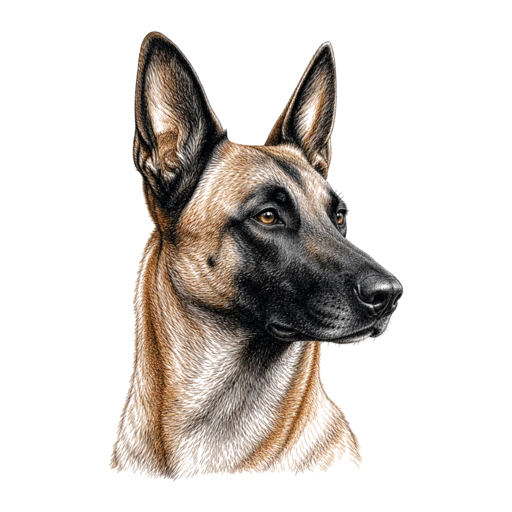

Buy for the puppy arriving now
A Belgian Malinois puppy needs less equipment than most puppy shopping lists would have you believe. What it does need is safe sleep, controlled freedom, familiar food, secure travel, simple rewards, appropriate things to chew and a plan for veterinary care.
The expensive working-dog gear can wait.
Buy for the puppy that is arriving now, not for the adult dog you picture two years from now. Puppies grow quickly. They also change their preferences, destroy fabric and outgrow harnesses. A modest setup that fits today is safer and more useful than a room full of specialised products.
This guide separates four decisions:
- what must be arranged before collection;
- what should be bought before the puppy enters the house;
- what should be measured or chosen after arrival;
- what should not be bought at all.
This guide contains no sponsored products or affiliate recommendations. Fit, material, supervision and the individual puppy matter more than the logo on the packaging.
Arrange these before buying equipment
The most important preparations cannot be delivered in a parcel.
Choose a veterinary practice
Register with a veterinary practice and arrange an examination soon after collecting the puppy. Ask the breeder exactly which vaccinations, parasite treatments, food and medications the puppy has received. Bring the records, microchip details and contract to the appointment.
Do not copy a vaccination schedule from a generic calendar on the internet. The correct timing depends on maternal antibodies, vaccine type, disease risk, previous treatment and local law. The AAHA canine vaccination guidelines explain why puppy vaccines are given as a series and why your veterinarian must still make the individual plan.
Ask the veterinarian where the puppy can socialise safely before completing its primary vaccination course. Keeping a puppy isolated throughout the main behavioural sensitive period carries risks of its own. The AVSAB puppy-socialisation position statement supports safe socialisation before full vaccination when suitable disease precautions are in place.
Save the numbers for:
- the normal veterinary practice;
- the nearest out-of-hours clinic;
- an animal poison service that operates in your country;
- the breeder;
- the insurer.
Make sure the poison service actually advises callers in your region. An emergency is a bad time to discover that it does not.
Arrange insurance and an emergency fund
Compare veterinary insurance before the puppy develops a condition that appears in its medical record. Read the policy, not only the attractive headline price.
Check:
- waiting periods;
- annual and lifetime limits;
- exclusions for hereditary or developmental conditions;
- rehabilitation and diagnostic imaging cover;
- dental rules;
- prescription-food and behavioural-treatment rules;
- excess and co-payment structure;
- travel cover;
- whether sport, security work, protection training or commercial use must be disclosed.
Insurance does not replace money that you can access immediately. You may still have to pay an excess, fund excluded care or settle the full invoice before reimbursement.
Complete identification and legal preparation
Confirm the microchip number and find out how to transfer the keeper or owner details. Order an identification tag if local law requires one. Check the licensing, lead, housing and liability-insurance rules where the dog will live and train.
Keep digital and paper copies of:
- purchase contract;
- pedigree or registration;
- microchip record;
- vaccination and parasite-treatment history;
- parent health results supplied by the breeder;
- the puppy’s veterinary records;
- breeder contact information;
- insurer and policy number.
Agree on household management
Decide where the puppy will sleep, eat, toilet, rest, train and stay while visitors are present. Also decide which rooms are available and which are not.
Agree on cues and rules before the puppy arrives. If one person rewards jumping, another pushes the puppy away and a third shouts, buying more equipment will not solve the problem.
Write down who handles:
- night toilet trips;
- morning feeding;
- supervision during work hours;
- school runs and visitors;
- gradual alone-time training;
- veterinary appointments;
- puppy classes;
- emergency transport.
Create four simple zones in the home
A practical setup gives the puppy four clearly defined places: one for sleep, one for supervised awake time, one for toileting and one for training or play.
1. A quiet sleep area
The sleep area normally contains a crate or another secure enclosure, simple bedding and good airflow. Keep it close enough that the puppy does not begin its new life in social isolation, but protect it from constant foot traffic, children and other animals.
2. A larger managed area
Use a puppy pen or a gated, puppy-proofed room when the puppy needs more movement than a closed crate permits. The puppy can then change position, drink, use an appropriate chew and settle while you remain nearby.
3. A predictable toilet route
Keep the lead, waste bags, coat, shoes and torch beside the exit. At 03:00, a clear route is considerably more useful than a decorative storage basket.
4. A non-slip interaction area
Provide a stable mat or runner for grooming, food toys, simple training and play. Buying an agility set will not make a slippery floor less slippery.
Essential item 1: a crate, a pen and barriers
A crate can help with sleep, safe travel, veterinary care and short periods of confinement. Use a pen when a closed crate would be too restrictive. Gates keep the puppy away from hazards while house training and self-control are still developing.
Chapter 6, “A New Leash on Life”, of The Power of Positive Dog Training (pp. 41–51; PDF edition pp. 60–69) remains useful for this specific subject. Begin with food and an open door, increase the duration in small steps, use the crate for management rather than punishment, and combine it with gates or a pen. The book dates from 2008. Where its details differ from current welfare and behavioural guidance, the current guidance takes priority.
Choose the crate by fit and purpose
The puppy must be able to:
- stand in a natural posture;
- turn around without folding against the sides;
- lie comfortably on its side;
- enter without ducking excessively.
An adult-size wire crate with a secure divider can save money. Inspect the wire ends, door latches and divider gaps carefully. The design must not allow a paw, jaw, tag or loose collar to become trapped.
A moulded travel crate may be easier to secure in a vehicle and more difficult to deform. Measure both the vehicle opening and the usable interior space before ordering. “Large” is not a measurement.
Buy cheap, washable bedding first
Start with folded towels, vet bedding or another washable, non-slip layer. Remove the soft bedding if the puppy keeps shredding or eating it. Do not spend much money on an adult bed before you know the puppy’s toilet and chewing habits.
Do not leave worn equipment attached
Remove all leads. During unsupervised confinement, consider removing collars and harnesses as well because tags, clips and straps can snag. You must balance this against the local identification rules and the actual environment.
Introduce confinement gradually
Feed the puppy near or inside the open crate. Scatter some food in it and let the puppy enter and leave freely. When the puppy is relaxed, close the door briefly and open it again before distress develops. Vary the duration instead of making every repetition more difficult than the previous one.
A puppy that drools, throws its body against the crate, bites the bars, screams continuously or fails to recover is not “learning to self-soothe”. End this unsafe situation and ask a qualified reward-based professional for help.
A crate is not an eight-hour puppy-storage box. Very young puppies need frequent toileting, movement, social contact and sleep. Use a pen, a puppy-proofed area and a proper care plan instead of expecting bladder control and emotional tolerance that the puppy does not yet have.
One observation in Chapter 4, “Behavior, Raising, and Training”, of The Malinois (pp. 175–178; PDF edition pp. 189–192) remains practically useful: some Malinois puppies keep going when they are overtired, so the handler must provide a quiet routine and enough rest. Other parts of the chapter rely on outdated hierarchy explanations and forced-exposure advice. This guide does not use those methods.
Essential item 2: puppy-proofing and non-slip surfaces
Good management prevents the puppy from practising dangerous or expensive behaviour while training is still developing.
Useful equipment can include:
- fixed gates for stairways;
- pressure-mounted gates for suitable doorways away from fall hazards;
- a secure pen;
- lidded rubbish and laundry containers;
- cable covers or inaccessible cable routing;
- child-resistant latches for cupboards containing food, medicine or chemicals;
- closed storage for shoes and children’s toys;
- non-slip runners on regular routes;
- a fence and gate inspection, including the bottom edge.
Get down to the puppy’s height and look again. The view changes considerably.
Remove or secure:
- batteries and battery-powered devices;
- medication and supplements;
- nicotine, tobacco and vaping products;
- cannabis products;
- chocolate, grapes, raisins and xylitol-containing products;
- cleaning concentrates and pest-control products;
- toxic plants;
- string, socks, hair ties and small children’s toys;
- blind and curtain cords;
- tools, antifreeze and garden chemicals;
- open balconies and gaps beneath gates.
The ASPCA poison-control guidance provides a useful reference for common hazards. If exposure occurs, however, use the emergency service that is available in your country.
Puppy-proofing does not prove that the house is safe under all circumstances. Supervise the puppy actively or use secure confinement.
Essential item 3: familiar food, water, bowls and storage
Ask the breeder for:
- exact product and formulation;
- amount currently fed by weight;
- number and timing of meals;
- treats and chews already introduced;
- several days of the current food;
- any previous digestive problem or food reaction.
Keep the puppy on the familiar food during the first few days unless a veterinarian advises otherwise. If the food needs to change, discuss a suitable transition.
Buy a complete growth diet, not a marketing story
Choose a food that is labelled as complete for growth under the rules in your market. Ask the veterinarian whether that food is suitable for this particular puppy.
The WSAVA Global Nutrition Toolkit provides practical questions for evaluating a manufacturer. Who formulates the diet? What expertise do they have? How does quality control work? Can the company provide a complete nutrient analysis? Labels such as “premium”, “natural”, “ancestral” or “working dog” answer none of these questions.
Buy:
- two stable, easily cleaned bowls;
- a normal fresh-water setup;
- an airtight food container kept cool and dry;
- a kitchen scale for repeatable portions;
- small training rewards;
- a portable water bowl;
- food toys that are safe for the individual puppy under supervision.
Do not buy months of food before confirming that the puppy tolerates it and that you can store it correctly. Keep the original packaging, or photograph the batch and best-before information before pouring the food into a container.
Count training food as food
A Malinois puppy may earn a great many rewards during the day. Use part of the measured daily food for easy repetitions and keep higher-value food for difficult environments. Keep additional treats modest so the overall diet remains balanced and the puppy maintains an appropriate body condition.
WSAVA’s nutrition materials recommend keeping treats below about 10% of daily calories for most pets. This is a calorie limit, not an instruction to underfeed a growing puppy. Ask the veterinarian to adjust the complete ration for the puppy’s growth, body condition and activity.
Do not add calcium or a supplement stack
A complete growth diet is formulated to provide a balanced supply of nutrients. Additional calcium, vitamins, oils and powders can disturb that balance. Every supplement needs a defined reason, a dose and a professional recommendation. A photograph of a muscular adult dog is not one.
Essential item 4: collar, harness and leads that fit now
Start with simple equipment:
- one lightweight flat collar;
- an identification tag where required;
- one comfortable puppy harness;
- one flat lead of roughly 1.5–2 metres;
- a longer training line for suitable open areas;
- a spare basic lead.
Check the fit at least once a week. A puppy can outgrow equipment surprisingly quickly.
There is no universally perfect harness shape
A well-fitted harness should avoid obvious rubbing, pinching, restricted front-leg movement and pressure over the throat. The puppy should not be able to reverse out of it.
The current evidence does not support claims that one harness design always protects gait while every other design causes injury. A 2026 review of dog-worn equipment found only limited research, mostly concerning generated pressure, lead forces, gait, eye pressure and a few injury reports. The practical conclusion is to be cautious around vulnerable anatomy, not to declare one product the universal winner.
Measure the puppy and watch it walk in the harness. After movement, check the armpits, sternum, neck and strap positions again. Once the fit is gone, replace the harness instead of trying to “make do”.
Learn long-line handling before using speed
A long line can burn your hands, wrap around legs, catch on obstacles and allow the puppy to accelerate into an abrupt stop.
- never wrap it around a hand;
- keep slack organised;
- use gloves when the context warrants them;
- avoid a collar attachment for high-speed movement;
- choose an open area;
- do not let children handle it;
- learn from a competent trainer.
Do not buy corrective equipment
Do not buy a choke chain, prong collar, electronic collar or head halter merely because a shopping list puts it under the heading “control”. The AVSAB humane-training position statement recommends reward-based training and advises against aversive methods and tools.
A piece of equipment can manage physical force. It cannot replace a reinforcement history, suitable environments or handler skill.
Essential item 5: a small, varied toy and chew set
Malinois puppies often interact with objects very intensely. What you need is variety, regular inspection and supervision, not twenty identical balls.
A useful starter set includes:
- two soft tug toys long enough to separate teeth from hands;
- one or two food-stuffable rubber toys;
- a soft carry toy;
- one appropriately sized chew;
- a light ball too large to swallow;
- one simple food-search item.
Start with only one or two of each type. The puppy will show you which materials and rewards are actually useful.
Match the toy to the context
An interactive tug belongs in your hands. A food toy for quiet confinement must meet different requirements. A ball that is suitable for supervised retrieval may become dangerous when left with a determined chewer.
Inspect toys before each use. Discard them when they develop:
- loose pieces;
- exposed stuffing or squeakers;
- splitting rubber;
- damaged rope strands;
- sharp edges;
- a size that can pass behind the canine teeth.
No toy is indestructible. Please note that its suitability changes when the adult teeth arrive and the dog’s jaw becomes stronger.
Avoid very hard chews and cooked bones
Very hard objects can fracture teeth. Bones and bone fragments can cause choking, digestive obstruction, mouth injuries and gastrointestinal damage. The VCA veterinary article on why bones are unsafe explains these risks.
Ask the veterinarian which chews are suitable. If an object has no give and you would not want somebody to strike it against your own teeth, choose something else.
Tug is not a dominance contest
You can use tug to teach engagement, a clean take, release, re-start, recall with a toy and a calm transition after play.
Keep the toy low. Do not lift the puppy by its teeth, wrench its neck or encourage uncontrolled collisions. Stop the game when the puppy becomes tired, loses coordination or repeatedly mouths your hands.
Essential item 6: simple reward-based training tools
You need very little hardware for early training.
Prepare:
- a washable treat pouch;
- small, soft rewards;
- a marker word, or a clicker if you understand its timing;
- a non-slip settle mat;
- containers so rewards are available around the home;
- a notebook or simple digital log;
- toys that the puppy can win, carry and return.
Keep rewards in the places where daily life happens. Use them to reinforce:
- toileting outside;
- orienting to the puppy’s name;
- coming when called;
- choosing a toy instead of clothing;
- four feet on the floor;
- relaxed handling;
- entering the crate;
- settling after activity;
- walking with the lead loose for a few steps.
A puppy does not need a bite sleeve, hidden sleeve, agitation whip or protection harness. In unqualified hands, protection equipment can create conflict, poor targeting and unsafe behaviour. Foundation training should build engagement, environmental stability, household manners and controllability according to a qualified professional’s plan.
Essential item 7: safe vehicle restraint
Decide how the puppy will travel home before you set off on collection day.
A secured travel crate is often the simplest solution. Depending on the vehicle design and local rules, a properly fitted vehicle restraint may also be suitable. In either case, the setup should prevent interference with the driver and reduce uncontrolled movement during sudden braking or a collision.
“Crash tested” does not refer to one universal legal standard. Ask who performed the test, whether the results are public and whether the exact size and attachment system were tested. The Center for Pet Safety test-results archive is one independent source for the products it has evaluated. A product’s absence or inclusion does not replace correct installation or the local requirements.
Check:
- the crate is physically secured, not merely placed in the boot;
- doors and emergency exits remain usable;
- ventilation remains adequate;
- sun cannot turn the location into a heat trap;
- the puppy cannot chew a seat belt or tether;
- a collision would not send luggage into the puppy;
- rescuers can identify and access the dog.
Pack for collection:
- crate or restraint;
- absorbent towels;
- spare bedding;
- water and bowl;
- waste bags;
- cleaning supplies;
- breeder records;
- a second adult to supervise if possible.
Unless the breeder or veterinarian advises otherwise, avoid feeding a large meal immediately before travel. During a long journey, choose toilet stops that do not place an incompletely vaccinated puppy in areas used heavily by other dogs.
Never leave a dog in a vehicle when the temperature may become unsafe.
Essential item 8: grooming, dental and cooperative-care basics
Make body care ordinary before it becomes medically necessary.
Start with:
- a soft brush or rubber grooming tool;
- towels;
- dog shampoo for occasional use;
- canine toothbrush and toothpaste;
- canine nail clippers or grinder after learning safe technique;
- a tick-removal tool where ticks occur;
- a stable non-slip mat;
- high-value food for cooperative handling.
Do not use human toothpaste for a dog. Choose ear cleaners, medicated shampoos, dental additives and skin products for a defined reason, ideally with veterinary advice.
Keep the first sessions very short:
- touch one paw;
- mark;
- reward;
- finish.
Build gradually towards examining the ears, lifting the lips, touching the nails, opening the mouth, brushing and calm restraint. Cooperative care develops through hundreds of easy repetitions. If you wait until the dog is injured, the most difficult situation becomes the first lesson.
Essential item 9: toilet and cleaning supplies
Accidents will happen. Prepare the following:
- an enzymatic cleaner intended for pet urine;
- paper towels or washable cloths;
- waste bags;
- a lidded laundry container;
- several washable bedding sets;
- a torch;
- suitable outdoor clothing beside the door.
Take the puppy outside after waking, eating, drinking, playing and changes of activity. Supervise it, reward toileting outside and clean indoor accidents without frightening the puppy.
Punishment can teach the puppy to hide its toileting from people. It cannot give the puppy a larger bladder.
Do not expect a strongly scented household cleaner to remove the odour information that draws the puppy back to the same place. Use a product designed to break down urine and follow its material-safety instructions.
Essential item 10: first aid and records
A first-aid kit helps you transport the puppy safely to veterinary care. It does not turn you into a veterinarian.
Ask the veterinary clinic what it recommends for your location and planned activities. A basic kit may contain:
- sterile saline;
- non-stick dressings and gauze;
- cohesive bandage;
- blunt-ended scissors;
- disposable gloves;
- tick remover;
- digital thermometer reserved for the dog;
- clean towel or emergency blanket;
- current medication and allergy information;
- veterinary, insurer, poison-service and microchip details.
Do not give the puppy human painkillers. Do not try to induce vomiting with salt, hydrogen peroxide or another home remedy unless a veterinarian or poison service specifically instructs you to do so for that dog and that exposure.
Keep one record sheet with:
- puppy’s normal weight and temperature guidance from the veterinarian;
- microchip number;
- medication and allergies;
- vaccination and parasite-treatment dates;
- insurer and policy number;
- veterinary contacts;
- emergency transport plan.
Take a first-aid course. A list of items cannot teach you how to deal with bandaging, shock, heat illness or cardiopulmonary resuscitation.
Do not buy exercise equipment for a young puppy
A Malinois puppy needs movement, exploration, play, coordination and rest. It does not need endurance work on roads, a weighted vest, repetitive jumping or a ball launcher.
There is no good evidence for the popular internet formula that allows exactly five minutes of exercise per month of age. This does not mean that unlimited impact is the correct alternative.
A prospective study of 501 large-breed dogs found an association between using stairs from birth to three months and later radiographic hip dysplasia. Off-lead exercise on softer ground was associated with a lower risk (Krontveit et al., 2012 ). The study did not include Malinois and cannot prescribe a universal amount of exercise. It does, however, support varied, self-directed movement on sensible surfaces rather than repeated forced loading.
For the puppy:
- allow free exploration in safe areas;
- keep formal sessions short enough to preserve coordination and interest;
- avoid repetitive high jumps, abrupt stops and forced distance running;
- limit unnecessary stair repetition, especially on slick surfaces;
- provide non-slip flooring;
- let growth, body condition, fatigue and veterinary advice shape progression;
- stop for lameness, stiffness, reluctance or altered movement.
A busy Malinois may not choose to rest without help. Equipment that creates even more activity is not automatically enrichment.
The purchase most people forget: a first-month plan
Equipment helps you manage the environment. Your daily schedule helps to develop the dog.
Before arrival, plan:
- veterinary examination;
- safe toilet locations;
- night supervision;
- gradual alone-time training;
- regular naps;
- meals and food transition;
- safe people, animals, sounds, surfaces and places to experience;
- reward-based puppy class with suitable disease precautions;
- short daily handling and grooming;
- calm vehicle practice;
- play, food searching and chewing;
- time to do nothing;
- help if work, illness or travel interrupts care.
Socialisation does not mean allowing uncontrolled greetings with every person and dog. It means providing safe, positive exposure and developing the ability to remain composed. The quality of these experiences matters more than the number you collect.
If the puppy freezes, hides, refuses food, tries to escape or remains highly aroused, increase the distance and make the situation easier. Do not force contact merely to “get it over with”.
What should wait
Wait until the puppy’s size, training direction and professional guidance justify the following purchases:
- adult tactical harnesses;
- weighted vests;
- bite sleeves, hidden sleeves and protection suits;
- expensive adult beds;
- large stocks of food;
- supplements;
- automatic ball launchers;
- agility jumps and unstable obstacles;
- adult-size muzzles that will not fit safely now;
- specialist tracking or detection equipment your trainer does not use;
- breed-branded gadgets that solve no current problem.
Some of this equipment may become useful later. Buying it early will not advance the dog’s training.
What should not be in the puppy kit
Do not include:
- prong, choke or electronic collars;
- cooked bones;
- toys small enough to swallow;
- retractable lead as the main training lead;
- human toothpaste;
- human painkillers;
- calcium or vitamin supplements without veterinary direction;
- equipment designed to exhaust the puppy;
- unverified “calming” products used instead of addressing fear;
- protection equipment without a qualified training plan.
Spend the remaining money on veterinary care, secure management, appropriate food, qualified instruction and enough time to use them properly.
One-page Malinois puppy checklist
Arrange before collection
- Veterinary practice and first appointment
- Out-of-hours and poison-service numbers
- Insurance and accessible emergency fund
- Microchip transfer and legal registration plan
- Household rules and care schedule
- Secure collection transport
- Suitable reward-based puppy class or trainer
- Several days of the breeder’s current food
- Contract, health and treatment records
Buy before collection
- Correctly sized crate with safe divider if required
- Puppy pen and suitable gates
- Washable bedding and towels
- Non-slip runners or mats
- Two bowls, food storage and kitchen scale
- Lightweight collar and identification tag
- Simple harness and flat lead
- Secure vehicle crate or appropriate restraint
- Two tugs, one or two food toys, carry toy and safe chew
- Treat pouch and small rewards
- Enzymatic cleaner, cloths and waste bags
- Brush, canine toothbrush and canine toothpaste
- Basic first-aid and records kit
Measure or choose after arrival
- Replacement harness as the puppy grows
- Long line after handling instruction
- Chew type based on actual chewing behaviour
- Additional food toys based on use and safety
- Nail tool after technique is demonstrated
- Adult bed after chewing and toilet habits are known
- Specialist working equipment only under the trainer’s plan
The best setup is deliberately boring: safe sleep, controlled freedom, familiar food, simple rewards and predictable care. This gives the Malinois puppy room to learn without practising chaos. It also gives the people enough structure to enjoy living with it.
Further reading
- WSAVA Global Nutrition Guidelines and owner tools
- AVSAB position statements on humane training and puppy socialisation
- AAHA canine vaccination guidelines
- ASPCA Animal Poison Control guidance
- The Power of Positive Dog Training by Pat Miller , especially Chapters 5–7 and 18–20
- The Malinois by Resi Gerritsen and Ruud Haak , Chapter 4, with current welfare guidance taking priority over its outdated sections
Product suitability, diet, vaccination, confinement, exercise and first aid depend on the individual puppy and require veterinary or behavioural judgement. Ask the puppy’s veterinarian and a qualified reward-based trainer about the risks in your location.