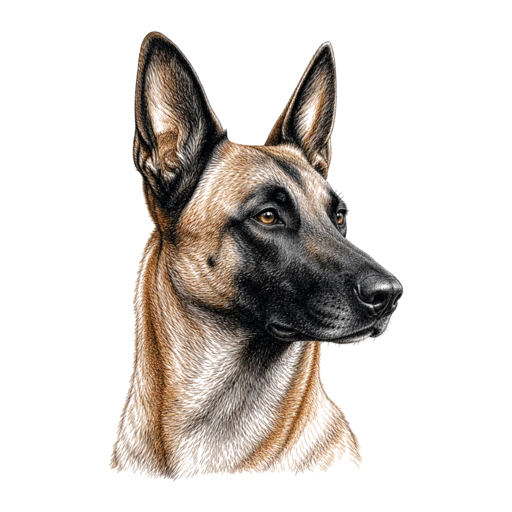

Protection training is not simply teaching a dog to bite
Belgian Malinois protection training does not begin with biting. It begins with deciding whether the individual dog is suitable, physically healthy and able to live safely under ordinary conditions. It continues with communication, engagement, reinforcement, environmental confidence, obedience, impulse control and recovery after excitement.
Bite work comes later, if it comes at all.
This distinction is not an attempt to make protection training sound polite. It is the practical difference between a controlled working dog and a liability. A reliable protection dog must spend almost all of its life not biting anyone. It must travel, wait, rest, pass irrelevant people, accept routine handling, respond to its handler and stop an activity when asked.
A dog that becomes suspicious of ordinary people, reacts whenever it feels pressure or remains highly aroused after the event has ended is not becoming more protective. It is becoming harder to control and potentially more dangerous.
The FCI Belgian Shepherd standard describes the breed as vigilant, active and confident, while also stating that the dog should show neither fear nor aggressiveness. Aggressive or timid behaviour is listed as disqualifying (FCI Standard No. 15, pp. 3–4 and 11 ). A breed standard cannot assess one dog, but it does correct a common beginner mistake: indiscriminate aggression is not correct Malinois temperament.
This blogpost explains the work that should come before specialist protection training. It does not teach you how to put a dog on a sleeve, provoke defensive behaviour, work a dog in a suit or prepare a dog to bite a person. Those activities require an individually assessed dog, an experienced trainer, a skilled decoy, suitable facilities and a safety system that cannot be supplied by an article.
Define what you mean by protection work
The phrase “protection dog” is used for several different activities. They may involve similar breeds and equipment, but they do not have the same purpose.
Protection sport
IGP, Mondioring and other protection sports use defined exercises and published competition rules. The dog performs on a training field, works with trained helpers or decoys and is judged against the requirements of that sport.
Sport protection is not a simulation of every real confrontation. A successful sport dog has learned a particular set of exercises under a particular rule system. This can demonstrate training, control and working qualities, but it does not automatically make the dog a personal-protection or police dog.
Personal protection
Personal-protection training is intended to prepare a dog for defined protective behaviour in the owner’s real environment. The legal meaning, permitted use and liability vary considerably between countries and sometimes between regions within one country.
The label is also used very loosely. Some sellers describe a dog as a “fully trained protection dog” after staged demonstrations that reveal little about the dog’s judgement, ordinary behaviour or reliability away from the training setup.
Do not begin with the fantasy of a dog making perfect legal and tactical decisions on your behalf. Begin with the much less exciting questions: Who controls the dog? Which behaviour is permitted? What happens around guests, children, contractors, medical staff and emergency workers? What insurance applies? What happens if the dog makes a mistake?
Police, military and security work
Operational dogs work within an organisation. Selection, training, certification, deployment, records, handler education and use-of-force decisions belong to that organisation and the applicable law.
A civilian owner should not copy an operational exercise after seeing a short video. The video does not show the dog’s selection history, the handler’s education, the agency’s procedures, the supporting team or what happened during the months before and after the recorded exercise.
Decide the real goal
Write down what you actually want before speaking to a trainer.
If the answer is “I want my dog to be more confident,” protection training may be the wrong solution. Confidence should be developed without teaching the dog to direct biting behaviour towards people.
If the answer is “I want my family to be safer,” improve doors, lighting, alarms, routines and professional security arrangements first. A dog is not a replacement for sensible physical security.
If the answer is “I want to participate in IGP,” visit a reputable club and learn how the complete sport works. IGP includes tracking and obedience as well as protection.
If the answer is “I want my puppy to bite a sleeve because it looks impressive,” stop. An impressive video is not a training objective.
The first requirement is a suitable individual dog
Being a Belgian Malinois does not make a dog suitable for protection work. Neither does a working pedigree, a loud bark, a strong interest in toys or a willingness to bite moving fabric.
The dog must be assessed as an individual.
The review Enhancing the Selection and Performance of Working Dogs describes working-dog success as the result of connected factors including genetics, early development, health, selection, training, the handler and the working environment. There is no single puppy test, drive score or pedigree label that replaces this complete picture.
Stable behaviour matters more than a dramatic response
A newcomer may look for the puppy or adult dog that reacts most strongly. Stronger is not automatically better.
A useful candidate should be able to:
- notice an event without losing the ability to respond to the handler;
- recover after a harmless surprise;
- investigate unfamiliar situations without being forced;
- accept ordinary social and veterinary handling;
- engage with food, toys or social play;
- think and learn while excited;
- disengage from irrelevant people, animals and movement;
- return towards a normal state after activity ends;
- tolerate frustration without redirecting onto the handler;
- remain physically and socially manageable outside training.
Confidence is not the absence of a startle response. Healthy dogs notice sudden events. The useful information is what happens afterwards.
A confident dog may pause, gather information and continue. A worried dog may need more distance and an easier situation. A dog that remains distressed, escalates rapidly or cannot reconnect with the handler is providing important information. Do not hide that information by applying more pressure.
Aggression is not courage
Fear, pain, frustration, territorial behaviour, resource guarding, predatory behaviour and trained protection responses are not interchangeable merely because teeth appear in each discussion.
A dog barking and lunging at unfamiliar people may be afraid. A dog biting when restrained may be trying to escape. A dog that guards food may have a resource-guarding problem. A dog chasing a tug may simply enjoy movement and play.
Calling every intense response “protection drive” prevents an honest assessment.
Do not attempt to turn fear-driven reactivity into protection work. Teaching a stressed dog that biting makes pressure disappear can create a dangerous learning history. The dog may become more likely to use biting whenever it feels trapped or threatened, including in situations that have nothing to do with legitimate protection.
Puppy behaviour is not an adult guarantee
A puppy can show useful tendencies, but a puppy cannot receive a reliable lifetime certificate for protection work.
A study of seven-week-old puppies found that a standardised test could be scored consistently, while also discussing the poor evidence for predicting adult temperament from testing at that age. Development continues through social experience, health events, adolescence, learning and the handler’s decisions.
This is why the existing guide on choosing a Malinois puppy for protection training treats puppy selection as risk management rather than fortune-telling.
A suitable puppy may mature into an unsuitable adult. An apparently ordinary puppy may develop very well. Continue assessing the dog instead of defending the prediction you made when it was eight weeks old.
Redirection is a responsible outcome
Some dogs should never do protection work. Others should stop when maturity, health or behaviour reveals a problem.
Redirecting the dog to tracking, detection, controlled sport without protection, another suitable working activity or an appropriate companion life is not failure. Continuing because money, pride or social-media expectations are already invested is the failure.
Health must be checked before training intensity increases
Behavioural enthusiasm does not prove physical health.
Arrange a veterinary examination before demanding more speed, force, restraint, jumping, abrupt changes of direction or sustained high arousal. Tell the veterinarian what activity you are considering. “Dog training” is too vague when the planned work involves collision, pulling, gripping, rapid acceleration or physically resisting another person.
The examination and history may need to consider:
- current gait, mobility and pain;
- hips, elbows, spine and previous injuries;
- teeth, mouth and jaw comfort;
- vision and hearing;
- heart and respiratory health;
- neurological signs or a family history of seizures;
- skin, feet and nail condition;
- body condition and muscular development;
- medication and its behavioural or physical effects;
- heat tolerance and previous heat illness;
- age, growth and physical maturity.
Pain can change behaviour. A dog that suddenly becomes reluctant, irritable, defensive during handling or less able to release an object may need a veterinary assessment rather than a firmer training session.
Do not use protection work to test whether the dog is sound. Establish health first, condition progressively and stop when movement or behaviour changes unexpectedly.
There is no universal birthday on which every Malinois becomes physically and emotionally ready. Growth, structure, health, temperament, foundation training and the demands of the intended activity all matter. A qualified trainer and veterinarian should evaluate the individual rather than applying one number copied from the internet.
Build a normal, manageable life before specialised work
A protection prospect must first learn how to live without protection work.
This includes sleep, household routines, transport, veterinary care, visitors, quiet time and the ordinary frustration of not getting everything immediately. These subjects can look unrelated to protection training. They are not.
A dog that cannot rest at home, wait in a vehicle or pass a person on a path without reacting is not ready for greater arousal and more complicated decisions.
Protect rest and recovery
Malinois puppies and adolescents may continue moving when they are overtired. The result can look like extra drive: biting clothing, frantic movement, poor concentration and escalating reactions. More exercise is not always the answer.
Provide a predictable quiet area and enough uninterrupted sleep. Use crates, pens or gates through gradual positive introduction, not as social punishment or all-day storage. The Malinois puppy supplies guide explains a simple home setup in more detail.
A working dog needs an off-duty life. Rest is part of training because learning, physical recovery and emotional regulation depend on it.
Teach neutral behaviour
The dog does not need to greet every unfamiliar person. It does need to remain safe and manageable around people who are irrelevant to the task.
Practise calm, rewarded behaviour around:
- people walking past at a suitable distance;
- visitors following a planned household routine;
- veterinary and grooming handling;
- other dogs without forced greetings;
- traffic, bicycles and ordinary movement;
- doors, gates, corridors and waiting areas;
- travel crates and vehicles;
- periods when another dog or person receives attention.
Neutrality is not suppression. A dog frozen by fear or shut down after correction is not calmly neutral. The dog should remain able to observe, eat, respond and recover.
Establish management before testing freedom
Use leads, gates, crates, pens, closed doors and secure fencing to prevent dangerous rehearsal. Management is not proof that training has failed. It is how you stop a young dog practising behaviour that is not yet trained.
Do not create avoidable tests. If a puppy has not learned to remain calm while a delivery arrives, put it behind a secure barrier with an appropriate activity. Repeating uncontrolled barking and rushing at the door does not produce a more capable protection dog. It produces practice at uncontrolled barking and rushing.
Build communication and voluntary engagement
Training becomes much easier when the dog understands how to obtain reinforcement from the handler and chooses to participate.
Engagement means that the dog is interested in interacting with you. It does not mean staring at your face every second or being prevented from exploring the environment. A useful dog can move between engagement with the handler and independent observation appropriate to the task.
Create rewards the dog can use
Food, toy play, movement and social interaction can all reinforce behaviour. Their value depends on the individual dog and the situation.
Find out:
- which food the dog can eat comfortably and safely;
- whether movement makes food or toy play more interesting;
- whether the dog enjoys chasing, carrying or interactive tug;
- whether possession causes the dog to leave and avoid the handler;
- whether close physical play creates enjoyment or discomfort;
- whether excitement remains organised enough for learning;
- how quickly the dog can return to work after a reward.
The objective is not maximum arousal. The objective is a reward system that lets the handler teach clearly without creating conflict.
A dog that takes the toy and runs away is not necessarily highly motivated to work with you. It may be highly motivated to possess the toy away from you. Build the social game rather than fighting the dog for the object.
Teach clear markers and cues
A marker tells the dog which behaviour earned reinforcement. A release cue tells the dog that a position or exercise has ended. A start routine helps the dog recognise when structured work begins. A finish routine helps the dog return to ordinary behaviour.
Keep the system simple.
If the same word sometimes predicts food, sometimes ends the exercise and sometimes means “perhaps do that again”, the dog has not failed to respect the word. The handler has failed to define it.
Before specialist work, you should be able to:
- mark a correct response consistently;
- deliver reinforcement without fumbling or creating conflict;
- start and stop a short game;
- recognise when the dog is too distracted or stressed to learn;
- lower the difficulty instead of repeating a failed cue;
- finish while the dog remains physically and emotionally organised.
Build toy play without turning it into bite work
Appropriate toy play can develop engagement, chasing, carrying, releasing and returning to the handler. It does not certify the dog for protection work.
Use toys suited to the dog’s age, mouth and chewing behaviour. Keep hands safely separated from the target area. Avoid wrenching the neck, lifting the dog by its teeth, violent side-to-side movement or continuing after coordination deteriorates.
Teach the dog that releasing an ordinary toy allows the social game to continue. Use reinforcement and fair exchanges. Do not pry the mouth open, hang the dog from the toy or apply pain.
Do not obsess over the puppy’s grip. Teething, fatigue, flooring, confidence, toy material and previous experience all affect puppy play. A full grip on a tug does not prove courage. A shallow grip on one day does not prove that the puppy has failed.
Teach everyday control before protection exercises
Control is not something added after the dog learns to bite. It is the foundation that must already exist.
The specialist book K9 Personal Protection makes this point in its structure: conditions for success, the human-dog relationship, basic education and obedience are addressed before the protection chapters. The useful principle is simple even where older books contain methods that should not be copied: ordinary control comes first.
Useful foundation behaviours
Before protection-specific work is considered, the dog should have a functional foundation that includes:
- responding to its name;
- coming when called in progressively more distracting safe environments;
- walking on lead without dragging the handler;
- sitting, lying down or standing when asked;
- remaining briefly in a position while the handler moves;
- going to a mat, platform, crate or vehicle area;
- waiting at doors and during loading or unloading;
- leaving an irrelevant object or activity;
- releasing an ordinary toy without conflict;
- stopping play and reconnecting with the handler;
- accepting collar, harness and body handling;
- remaining manageable around unfamiliar people and dogs;
- settling after activity.
These behaviours do not need competition precision. They do need clear meaning and a history of reinforcement.
Reliability is built gradually
A cue that works in the kitchen is not finished. A cue that works in a quiet field may fail near movement, another dog or a familiar training helper.
Generalise one important variable at a time:
- change the location;
- change the distance;
- add a mild distraction;
- change the handler’s position;
- change the duration;
- practise after a small increase in excitement;
- confirm that the dog can return towards calm.
Do not change all variables together and then punish the dog for being confused.
Protection work raises arousal and introduces highly valuable activities. If ordinary cues are already weak, greater excitement will not repair them. It normally exposes the weakness more clearly.
The handler must also be trained
Newcomers often describe the dog as stubborn when their own timing, lead handling or reward delivery changes on every repetition.
The handler must learn to:
- hold and organise a lead safely;
- avoid wrapping lines around hands or legs;
- keep criteria consistent;
- observe the dog’s body rather than only the final response;
- reward at the correct moment and position;
- separate a training error from a welfare or medical problem;
- stop before fatigue damages the session;
- accept feedback without blaming the dog.
A powerful Malinois magnifies poor mechanics. Handler education is not an optional accessory purchased after the dog is trained.
Develop confidence without manufacturing fear
Environmental confidence is the ability to process a situation, recover and continue functioning. It is not the ability to endure whatever a person decides to do.
Introduce the dog progressively to the environments it may need in ordinary life and future sport or work. These can include different surfaces, buildings, stairs, vehicles, darkness, weather, people wearing unusual clothing and controlled background noise.
The dog should be able to investigate at a suitable distance. Reinforcement, play and social support can make the experience useful. If the dog cannot eat, play, explore or respond, reduce the difficulty.
The AVSAB puppy-socialisation position statement supports safe, positive early exposure and specifically warns against overstimulation that produces excessive fear, withdrawal or avoidance.
Do not perform courage tests
Bad examples include:
- dropping metal objects behind the dog;
- opening an umbrella into the dog’s face;
- dragging the dog across a surface;
- forcing the dog into a dark or confined space;
- tying the dog so that escape is impossible and applying pressure;
- encouraging strangers to threaten the dog;
- praising fear-driven barking as protection;
- continuing until the dog “gives up”.
These activities can create fear, defensive behaviour, learned helplessness or distrust. They do not reveal how a carefully trained adult will perform.
Recovery matters more than appearance
Record what happened in observable language.
Write “moved back two metres, took food after twenty seconds and then approached” rather than “weak nerves”. Write “remained unable to respond for five minutes” rather than “needs more pressure”.
Descriptions help you adjust training and notice change over time. Labels encourage people to defend an interpretation.
Teach the dog to recover after excitement
A working Malinois needs arousal. It also needs regulation.
Arousal can increase speed, effort and persistence. Too much can reduce precision, learning and judgement. A dog moving rapidly is not necessarily processing information well.
The Stress Factor in Dogs explains how stress can affect behaviour, learning and memory, and includes working and performance dogs among the populations considered. The open-access review The Animal Welfare Science of Working Dogs similarly argues that performance and welfare must be considered together rather than treating the dog as equipment.
Learn the dog’s ordinary baseline
Observe the dog when it is healthy and relaxed. This gives you something to compare with training days.
Notice:
- normal appetite and water intake;
- sleep quantity and quality;
- resting posture and breathing;
- ordinary interest in people, food and play;
- normal gait and willingness to move;
- how the dog behaves before training;
- how long recovery normally takes afterwards.
Changes can indicate pain, illness, accumulated stress, heat, fatigue or a training problem.
Watch transitions between states
Useful working ability includes moving:
- from rest into engagement;
- from engagement into a learned behaviour;
- from reward back into attention;
- from excitement into a pause;
- from a mild surprise back into exploration;
- from the end of training towards ordinary behaviour;
- from transport or waiting into work without frantic anticipation.
A dog that can only become more aroused has an incomplete system.
Recognise signs that the session is deteriorating
Possible warning signs include:
- frantic, increasingly disorganised movement;
- repeated grabbing of the lead, clothing or handler;
- inability to take familiar food;
- unusually hard or indiscriminate mouthing;
- delayed responses to well-known cues;
- scanning that prevents re-engagement;
- avoidance, freezing or attempts to escape;
- sudden displacement behaviour such as excessive sniffing or scratching;
- a marked change in grip, gait or willingness to move;
- failure to settle long after the work ends.
One sign does not diagnose the cause. Look at the complete dog and situation. Stop when safety is declining, then investigate rather than adding intensity.
Do not suppress warning signs
Punishing growling, avoidance or other communication can make the visible warning disappear while the underlying discomfort remains. This produces less information, not more safety.
The AVSAB humane dog-training position statement recommends reward-based methods and advises against methods relying on force, pain or emotional or physical discomfort. In a controlled study, dogs from aversive-based training schools showed more stress-related behaviour, higher post-training cortisol increases and a more pessimistic response in a cognitive-bias task than dogs from reward-based schools (Vieira de Castro et al., 2020 ).
Protection work is not an exemption from welfare standards. Electronic collars, prong collars, choke corrections, pain, intimidation, forced restraint and dominance rituals are not part of the foundation described here.
Prepare the dog’s body as well as its behaviour
Protection sport and operational work can involve acceleration, deceleration, jumping, turning, pulling and physical contact. Enthusiasm does not protect joints, muscles, teeth or the cardiovascular system.
Build general physical preparation before specialist intensity:
- maintain an appropriate body condition;
- develop regular walking and varied controlled movement;
- use suitable non-slip surfaces;
- protect growing joints from repetitive impact;
- maintain nails and paw condition;
- warm up before demanding activity;
- cool down and inspect the dog afterwards;
- provide water, shade and a heat plan;
- increase duration and difficulty progressively;
- allow recovery between demanding sessions.
Conditioning should match the individual dog’s age, health and intended work. Ask a veterinarian or qualified canine conditioning professional when there is uncertainty.
Do not use repeated bite-work sessions as the dog’s conditioning programme. Skill training and physical conditioning overlap, but they are not the same thing.
Also prepare the handler. If you cannot control your own balance, line handling or movement, you can injure the dog, yourself or another person before any advanced training begins.
Choose the trainer and decoy before buying protection equipment
Do not buy a sleeve, suit, agitation whip or “protection harness” and then search for instructions.
Find the trainer and programme first.
A competent trainer should assess the dog, the handler and the goal before recommending protection work. The trainer should be willing to say no. A competent decoy or helper should understand canine behaviour, reinforcement, pressure, movement, equipment, physical safety and the intended discipline. Simply owning a sleeve and being willing to get bitten does not provide those skills.
The specialist book K9 Decoys and Aggression devotes separate chapters to the role of the decoy, physical requirements, canine communication, human-canine communication and safety-related basic skills. Some methods in older protection literature do not meet the welfare standard used by this website, but the book’s structure demonstrates an important point: decoy work is a skilled discipline, not a costume.
Questions to ask a trainer
Ask directly:
- Which protection discipline do you train for?
- What experience and independent assessment do you have in that discipline?
- How do you evaluate whether a dog is unsuitable?
- What foundations must exist before protection-specific exercises begin?
- May I observe several sessions without my dog?
- How do you build engagement, obedience and release behaviour?
- How do you respond when a dog shows fear, avoidance or poor recovery?
- Which equipment do you use, and why?
- How do you prevent injury to dogs, handlers, decoys and observers?
- What veterinary, vaccination and fitness requirements apply?
- How are training plans and incidents recorded?
- What are the insurance and legal requirements?
- What happens if the dog should stop protection work?
Useful answers are specific. “We have trained hundreds of dogs” does not explain methods, safety or outcomes.
Observe the complete session
Do not judge the programme only by the thirty seconds when a dog is gripping equipment.
Watch:
- how dogs arrive and leave;
- whether waiting dogs can rest;
- how handlers manage distance and equipment;
- whether trainers explain decisions;
- whether the dog remains socially manageable;
- how release and control are handled;
- what happens after a mistake;
- whether stress signals change the plan;
- whether equipment fits and surfaces are safe;
- whether the dog recovers after the exercise;
- whether inexperienced people are given tasks beyond their ability.
A good trainer does not need to manufacture chaos to look experienced.
Protection-training red flags
Leave when you see or hear:
- a guaranteed protection result for every Malinois;
- protection work sold as a cure for fear or reactivity;
- deliberate frightening, trapping or flooding of the dog;
- pain or intimidation described as necessary respect;
- electronic, prong or choke-collar corrections;
- talk about making the dog “civil” by encouraging suspicion of ordinary people;
- a decoy applying more pressure while the dog is trying to escape;
- praise for indiscriminate aggression;
- punishment for growling or other warning communication;
- puppies pushed through physically or emotionally inappropriate work;
- no ordinary obedience, release or recovery standard;
- no written safety rules, insurance or emergency plan;
- unqualified visitors placed in bite equipment;
- injuries dismissed as part of making the dog tough;
- pressure to buy expensive equipment before the dog is assessed;
- contempt for veterinary or behavioural advice;
- training that must remain secret from your family, veterinarian or insurer.
A trainer who mocks sensible questions is answering them.
Know the warning signs that should pause or stop the project
Suitability is not decided once. Reassess it throughout development and training.
Pause and obtain appropriate professional help when you notice:
- pain, lameness or a sudden movement change;
- seizures, collapse or unexplained neurological signs;
- a sudden change in sociability or handling tolerance;
- increasing fear of the training place, trainer or equipment;
- repeated redirection onto the handler;
- aggression spreading to unrelated people or situations;
- inability to release ordinary toys without conflict;
- prolonged arousal after training;
- declining sleep, appetite or ordinary enjoyment;
- avoidance hidden by freezing or mechanical compliance;
- repeated loss of previously reliable everyday control;
- household members becoming unable to manage the dog safely;
- the handler using greater force because communication is failing;
- a training team unwilling to reduce pressure or reconsider the goal.
First exclude pain or illness with a veterinarian where relevant. Then review the training, environment, recovery and suitability with a qualified reward-based behaviour professional and the protection trainer.
Do not continue protection work while hoping that more protection work will solve a problem created by protection work.
Use a readiness checklist without pretending it is a guarantee
The following checklist is a discussion tool. It does not qualify a dog for bite work.
The dog
- Has received an appropriate veterinary examination for the planned activity.
- Moves comfortably and has suitable progressive conditioning.
- Shows stable, manageable behaviour in ordinary life.
- Can recover after mild novelty or excitement.
- Can accept routine handling and veterinary care.
- Has useful food, play or social reinforcement.
- Can engage voluntarily with the handler.
- Can release an ordinary toy without pain or conflict.
- Responds to recall and basic position cues in several environments.
- Can wait, travel and settle when work is unavailable.
- Can pass irrelevant people and dogs without uncontrolled behaviour.
- Has not been selected merely because of breed, pedigree or dramatic puppy play.
The handler
- Has defined the intended discipline and realistic goal.
- Understands that protection work may never be appropriate for this dog.
- Can manage the dog safely in ordinary environments.
- Can use markers and reinforcement consistently.
- Can handle leads and equipment without creating hazards.
- Recognises common signs of stress, pain and deteriorating performance.
- Can stop a session without treating it as a personal defeat.
- Has time and money for long-term training, veterinary care and management.
- Has discussed the project with affected household members.
- Has checked applicable law, housing rules and insurance.
The training programme
- Uses an experienced trainer in the intended discipline.
- Uses a skilled, accountable decoy or helper where required.
- Assesses the dog and handler before protection-specific work.
- Requires ordinary control, engagement and recovery.
- Uses reward-based training without e-collars, prongs, choke corrections, pain or forced pressure.
- Has suitable facilities, surfaces, barriers and emergency procedures.
- Keeps the dog below a level where fear or disorganisation prevents learning.
- Has a clear plan for pausing, stopping or redirecting the dog.
If several boxes remain empty, the next step is not bite work. The next step is to improve the foundation or reconsider the project.
Even when every box appears complete, an experienced professional still needs to assess the dog in person. A checklist cannot see posture, timing, recovery, handler mechanics or the interaction between this particular dog and this particular environment.
What a newcomer should do next
Do not begin by searching for bite-development videos.
Use the following order instead:
- Define the goal. Decide whether you mean a protection sport, personal protection or another activity entirely.
- Check the ordinary life. Make sure sleep, household management, transport, veterinary handling and neutrality are functioning.
- Arrange health care. Discuss the intended activity with the dog’s veterinarian and address pain, movement or health concerns.
- Build communication. Establish clear markers, releases and short reward-based sessions.
- Build engagement. Develop food and toy rewards the dog can use without conflict or frantic arousal.
- Train everyday control. Work on recall, positions, waiting, settling, handling and stopping play.
- Develop environments progressively. Use safe exposure, distance, choice and recovery rather than courage tests.
- Visit qualified programmes without the dog. Observe complete sessions and ask direct questions.
- Have the dog and handler assessed. Accept an unsuitable result when that is the honest result.
- Keep a fallback plan. The dog’s welfare and safe future do not depend on completing protection work.
This preparation is not time lost before the interesting work begins. It is the work that determines whether later training can remain clear, controlled and responsible.
A reliable protection dog is not defined by the fact that it can bite. Many dogs can bite. The difficult part is producing a healthy dog that understands the task, remains under control, ignores irrelevant situations and returns to ordinary life afterwards.
That starts long before a sleeve appears.
Further reading
- FCI Standard No. 15: Belgian Shepherd Dog , especially behaviour and temperament on pp. 3–4 and disqualifying faults on p. 11
- American Veterinary Society of Animal Behavior: Humane Dog Training Position Statement
- American Veterinary Society of Animal Behavior: Puppy Socialization Position Statement
- Bray et al.: Enhancing the Selection and Performance of Working Dogs
- Cobb, Otto and Fine: The Animal Welfare Science of Working Dogs
- Vieira de Castro et al.: Does Training Method Matter? Evidence for the Negative Impact of Aversive-Based Methods on Companion Dog Welfare
- Handbook of Applied Dog Behavior and Training, Volume 1: Adaptation and Learning by Steven R. Lindsay, especially the chapters on development and learning
- Handbook of Applied Dog Behavior and Training, Volume 3: Procedures and Protocols by Steven R. Lindsay, especially Chapter 1 on communication, attention, impulse control, play and training-session design
- K9 Personal Protection by Resi Gerritsen and Ruud Haak , especially Chapters 1, 3–5, 16 and 17; use current welfare guidance instead of outdated methods
- K9 Schutzhund Training by Resi Gerritsen and Ruud Haak, especially Chapters 6 and 12–17; this concerns IGP and must not be treated as a personal-protection or police manual
- K9 Decoys and Aggression by Stephen A. Mackenzie, especially Chapters 1–4 and 7; use it to understand the decoy’s responsibility, not as a reason to copy aversive procedures
- The Stress Factor in Dogs by Kristina Spaulding, especially Chapters 3–7
- The Power of Positive Dog Training by Pat Miller , especially Chapters 2, 5 and 17
This article provides general education. It cannot assess a particular dog, handler, trainer or protection programme. Obtain individual veterinary and qualified reward-based professional advice, and follow the laws, insurance conditions and organisational standards that apply where you live.